
One of the latest reports McKinsey (Consulting firm, which lists among its clients the largest companies, institutions and governments of the world) “Overcoming obesity: An initial economic analysis”, has addressed the issue of obesity worldwide and how, together with overweight affects the GDP in different countries (currently the 30% the world's population is afflicted by this real emergency for the economy of the world).
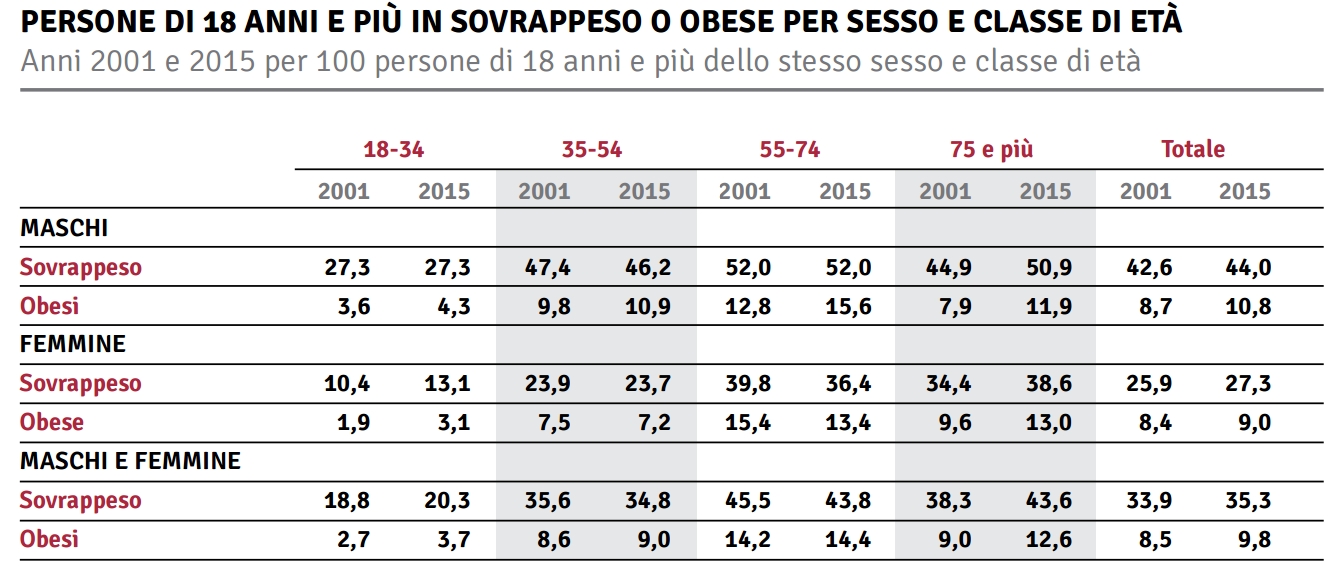
Even for our country, the economic impact is substantial (the 2,9% Pil, equal to 48,6 billion euro for care and investments to reduce it). The phenomenon has increased slightly over the past decade in Italy, compared to other OECD countries (source: Health Statistics 2014): of 8.6% in 2000 a 10.4% in 2012, percentage calculated based on the data of height and weight self-reported.
The increasing prevalence of obesity suggests an increase in chronic diseases such as diabetes and cardiovascular disease, with important repercussions on the future health spending (in 2016 was the 45% the percentage of the Italian population between obese and overweight – Istat data,,it,Istat data,,it,Istat data,,it,Istat data,,it).
As in many other European countries, health spending in Italy has declined in recent years, as a result of government efforts to reduce budget deficits in the context of the economic crisis. In many OECD countries, including Italy, a reduction in pharmaceutical spending has contributed to the overall reduction in health expenditure.
In Italy, pharmaceutical spending has declined every year since 2009, with a reduction of more than 6% in real terms 2012. Between 2008 and 2012, spending on drugs fell by 14% in real terms.
It is therefore to exercise awareness campaigns on the subject, the report says McKinsey, that we should start from a more healthy diet, going to limit your intake of foods that, if consumed daily, are harmful to the body and increase for example the hours of physical education in schools, and the movement of citizens in general.
Good walk!
Alex Gaetani